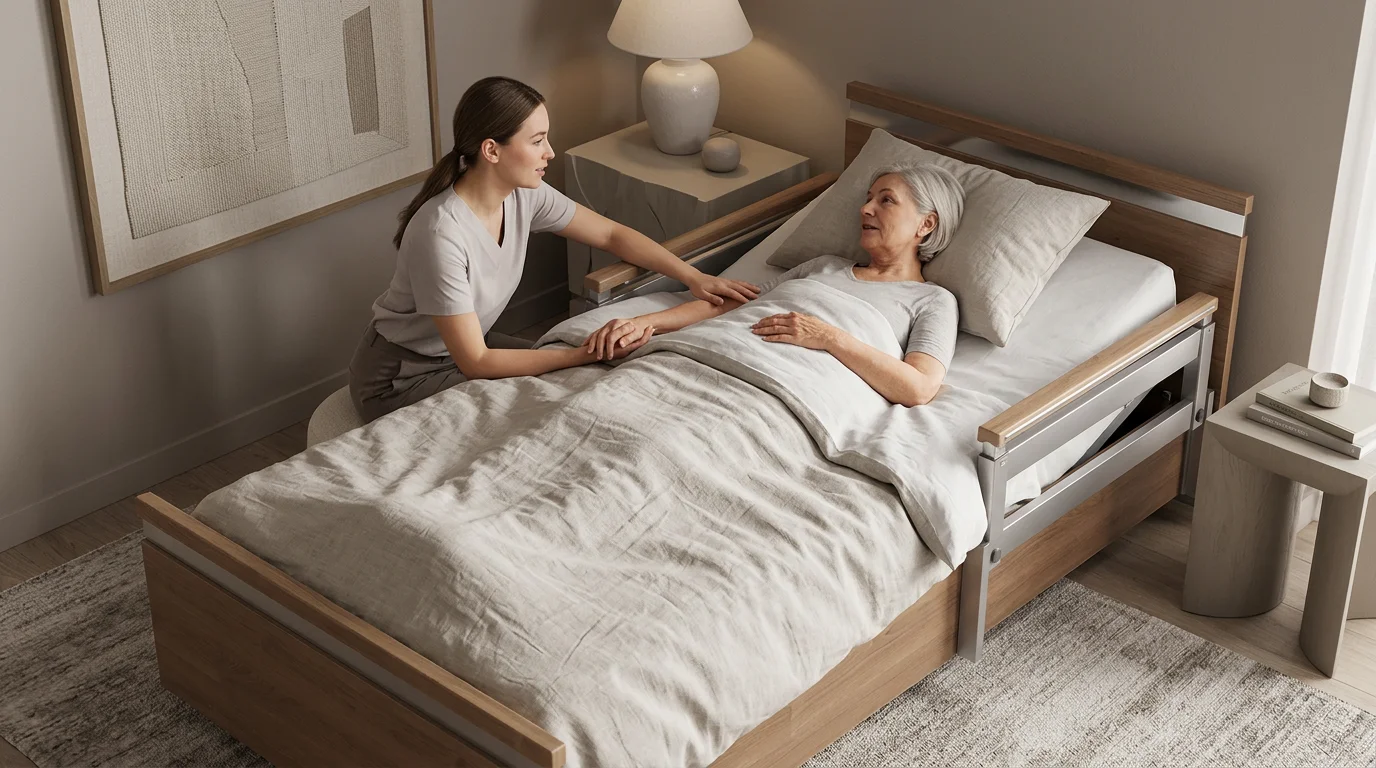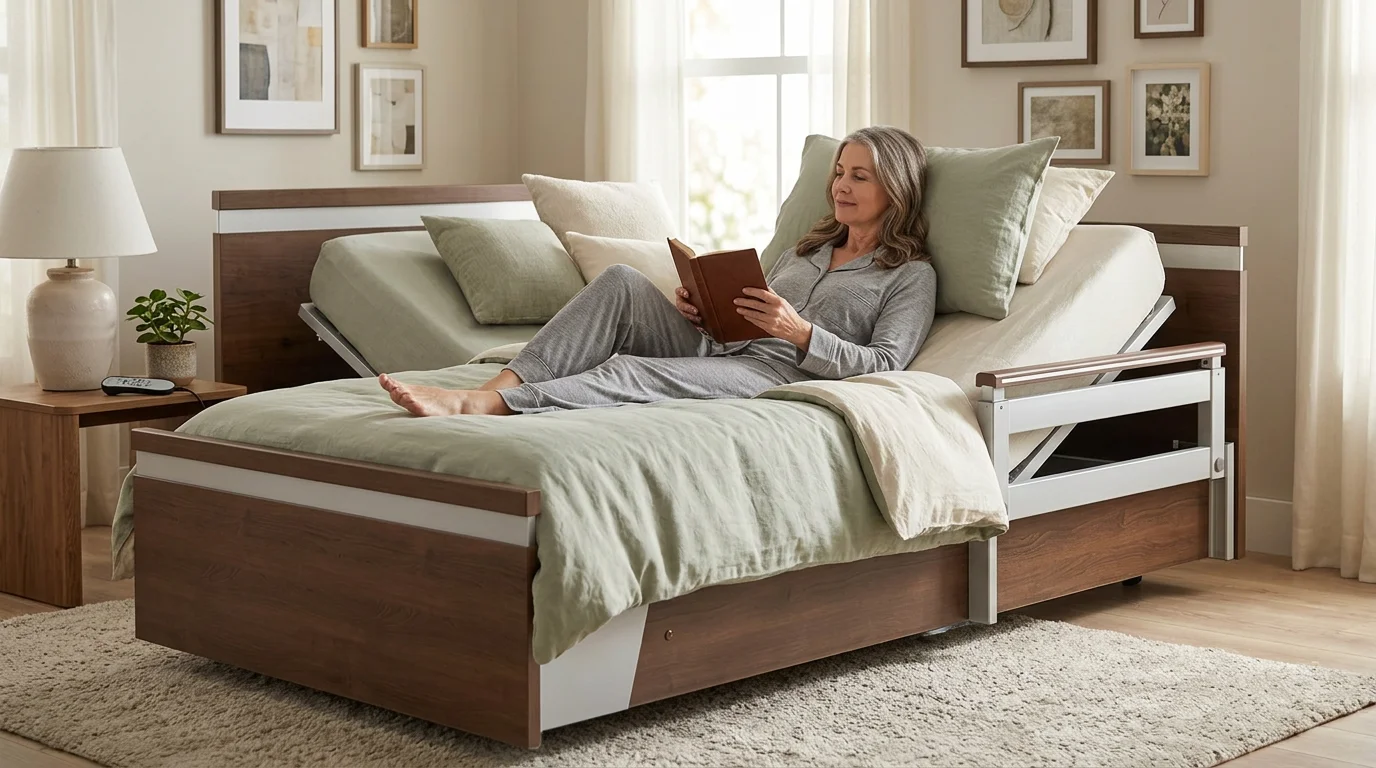








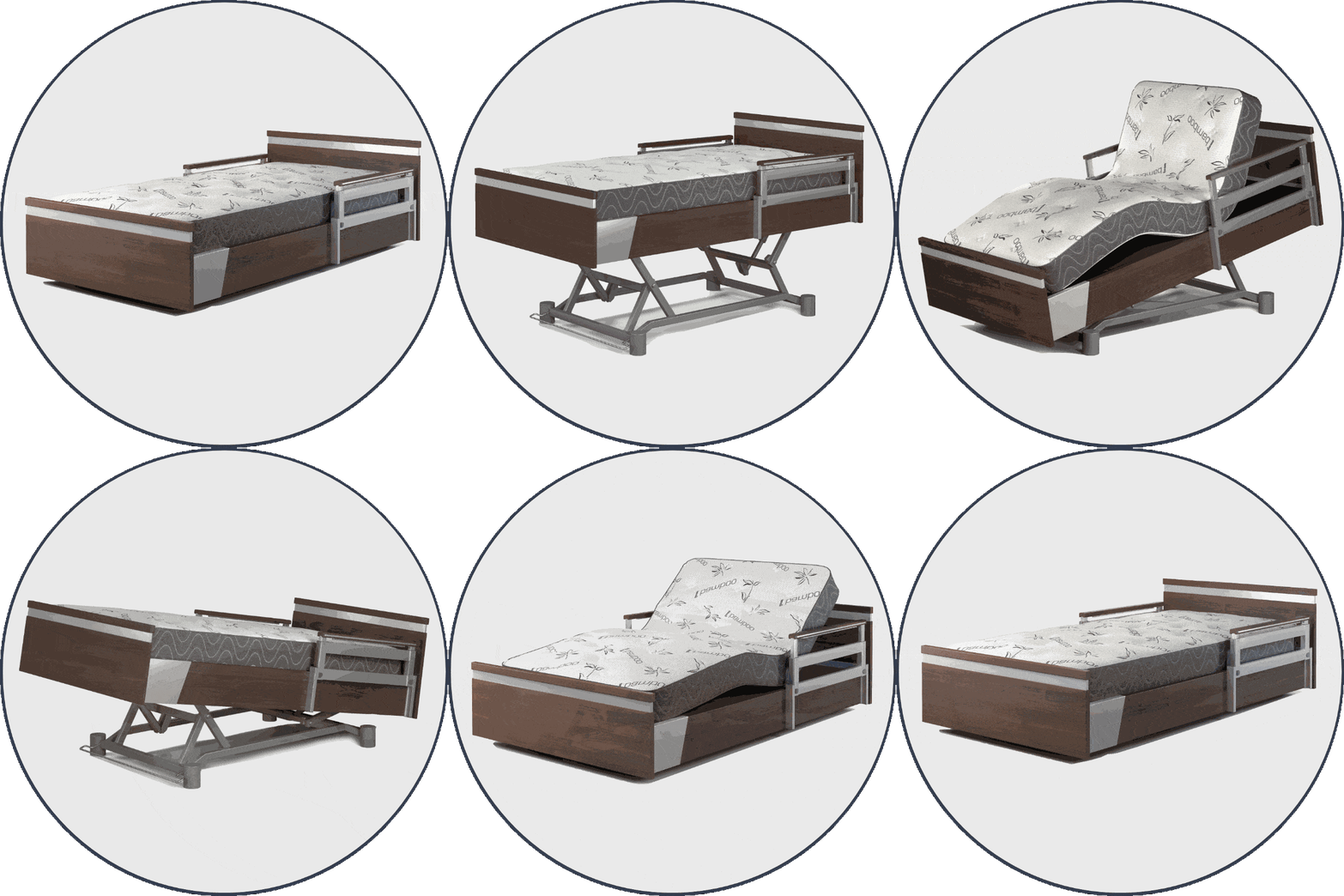
Do Hospital Beds Have Wheels? Hospital beds are quite different from standard adjustable beds for many reasons. One feature we’ll highlight here is the inclusion of wheels on hospital beds. The heavy-duty wheels let these models be moved easily and quickly. While this is necessary for a fast-paced healthcare setting, can wheels help you at home? Yes, and you’ll find them very useful for homecare needs.
Learn About The Wheels On A Hospital Bed
Why Do Hospital Beds Need Wheels?
The wheels on all types of hospital beds are essential features for the different settings that demand these models. They make it easier to move the bed to various locations in the health care facility; once in place, everyone can rest easy knowing that the wheels are locked and that the bed will not move.
Wheels are necessary because, in health care facilities, the best setting for treating a patient can change instantly. If doctors need to move them to a new room, health care workers can do so quickly, often without needing to take the patient out of bed. The portability of hospital beds also makes it easy to accommodate mobility aids like wheelchairs, medical equipment, commodes, and other features in the room. If a patient needs to be manually transferred to a stretcher as they can’t walk or stand, the caregivers may move the bed slightly in the room to create more space for the stretcher.
They aren’t just different from adjustable beds – hospital beds with wheels are also very different from other wheeled hospital implements like stretchers and gurneys. Because the latter is for transportation rather than rest, they are light and move more freely, with a much thinner mattress. You can typically raise the head of the stretcher, but you may not be able to raise the feet or lower the head below flat level, as you can with a bed.
Wheels might not seem like a real innovation, but they represent a big step forward in the evolution of hospital beds. Since their introduction in the 1800s, hospital beds have added wheels and other features to become much more helpful for recovery and well-being in any place where healthcare is delivered: not just hospitals, but nursing homes and private care settings, too.
How Wheels Can Help You At Home
Having wheels attached to the hospital bed can be very beneficial at home. If you’re an adult child with a convalescing parent, you or a caregiver can shift them from one part of the room or floor to another without risking their health. Depending on the patient’s needs, movement of the bed even a few inches may be necessary.
Wheels are good features should the patient want to change their bed’s location. Hospital beds are not small pieces of furniture – they have many features suitable for patients with health and mobility issues. If the user wants to change the location of their bed within their room or home – for instance, they want to position the bed closer to a window – the wheels make it easy for their loved ones or caregivers to move it.
Hospital Bed Wheels Must Have A High-Quality Locking Mechanism
When choosing a hospital bed, make sure that it has an operating wheel locking system. This common feature keeps the bed in place and helps patients and care providers avoid accidents. For safety, caregivers must lock the wheels once they’ve brought the bed to the desired location. The caregiver should lock the wheels before a patient transfers in or out of bed. It’s also important if children or pets could get underfoot – you don’t want the wheels snagging them.
Locking mechanisms are also essential for patients who might move a lot. The brakes can stop the whole bed from rolling if the user becomes agitated or moves involuntarily due to their condition. All in all, they make modern hospital beds safe and useable in both home and institutional settings.
You’ll find the convenience and safety of locking wheels on all SonderCare luxury hospital beds. Our models come with wheel-casters and a central brake pedal. However, don’t take the inclusion of wheels as something institutional – it’s a feature the user might not even notice on their SonderCare bed, as the wheels are completely hidden to provide a beautiful, residential look.
Frequently Asked Questions About Moving and Wheels On Hospital Beds
How many wheels does a hospital bed have?
Hospital beds typically have 4 wheels to guarantee ease of mobility in a clinical or home setting. What differs is the locking mechanism, the ease and direction of movement as well as whether or not the wheels are protected by casters as with the SonderCare home hospital bed series.
How do you push a hospital bed?
Always push the bed with your back straight and in a controlled, deliberate manner. Be very careful when traversing corners or doorways and never operate the bed when the occupant is unaware, unsecure or unsafe.